
Google Ads is a way to get targeted traffic, generate good leads and grow your business. But many advertisers, new ones face a big problem. Spend a lot on ads but don’t get any benefits. The common thing is getting a lot of clicks. Those clicks aren’t turning into leads or sales. Usually this isn’t because your ads are bad or you don’t have money but because you’re not targeting the right people. That’s where negative keywords come in. Negative keywords are really important for saving your ad budget, getting the right people to see your ads and making money from your ads.
In this blog I will explain everything you need to know about keywords.
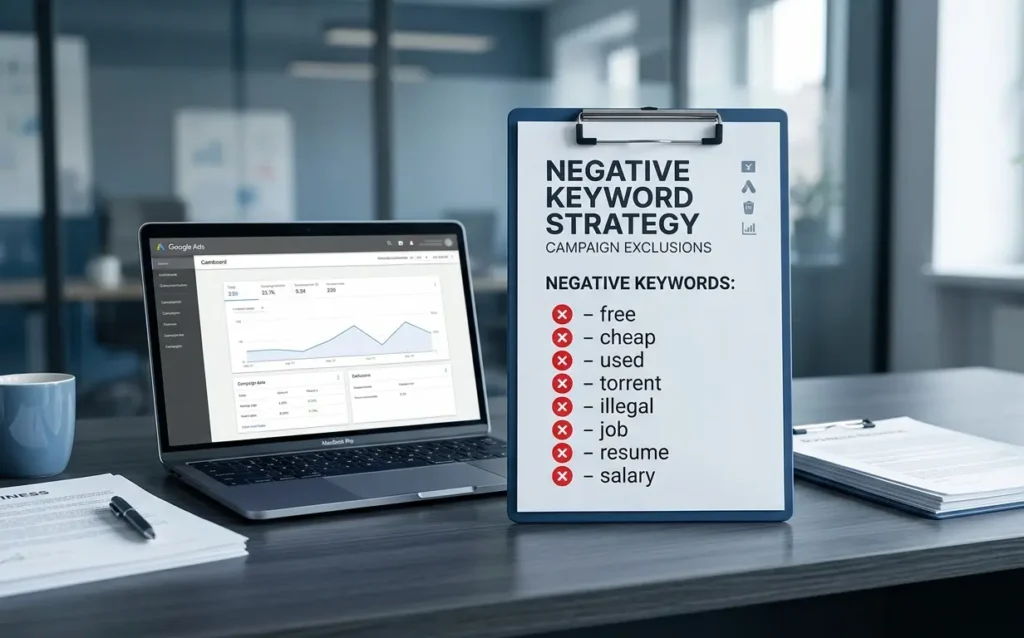
What Are Negative Keywords?
Negative keywords are words or phrases you add to your Google Ads campaign to stop your ads from showing up for searches that don’t matter or aren’t likely to buy.
By adding keywords you can decide who can see and can’t see your ads, by that ad reaching the right audience and getting quality leads. For any digital marketer, understanding how to use negative keywords effectively is essential for running efficient and profitable advertising campaigns.
Why Negative Keywords Matter More Than You Think
A lot of people who’re new to this only think about a few things like Keyword targeting, Ad copy, Budget. But if you do not use keywords you can waste a lot of your budget.
1. Stop Wasting Money
If you do not use negative keywords, your ads might show to the search topics that are not relevant to your business. For example if your keyword is “travel packages” your ad might show up when people search for “free travel deals” , “travel jobs”.
2. Get Better Quality Clicks
keywords help filter out people who are not the right audience for your business. This means that only people who are really interested in what you have to offer will click on your ads. Negative keywords make sure that you get quality clicks from people who are actually looking for what you have. Using keywords is a good way to make sure your ads are seen by the right people and that is why negative keywords are so important.
3. Improving conversion Rates
When you are not getting people who’re not interested in what you have to offer, the number of people who actually want to buy from you goes up. This indicates that your ads are generating results.You will see that the number of people who’re actually interested in what you have to offer is higher. This is because you are not wasting your time with people who do not want what you have.
4. Getting A Better Quality Score
Google looks at how relevant your ads are and gives you a Quality Score. When you show your ads to the people who’re actually interested in what you have to offer Google says that your Google ads are relevant. This means that Google thinks your Google ads are a match for the people who see them. This means that:
- Your ads become more relevant to the people who see them
- You do not have to pay much money for each click on your ads
- Your ads show up higher in the search results for conversion rates and quality score
How to Identify Negative Keywords
Finding negative keywords is an ongoing process that helps improve your ad campaign. The goal is to target the people by looking at how they search and removing searches that are not relevant.
1. Search Terms Report
The Search Terms Report is the place to find negative keywords. It shows what people searched for before they clicked on your ad.
This report helps you to
- Understand what people are really looking for
- Find searches that are not relevant to your ad
- See which searches are costing you money but not giving you results
By checking this report you can quickly find searches that are not relevant and fix the problem.
2. Intent-Based Filtering
Not all keywords are useful. You need to think about what people are trying to do when they search. Searches can be Informational (learning or researching), navigational (looking for a brand) or Transactional ( to buy or ask).
For most campaigns you want to focus on transactional searches. Searches that are just informational like those with words such as free, guide, PDF or how to often do not lead to sales. Should be excluded. Filtering by intent ensures your ads reach users who are more likely to convert.
3. Keyword Research Tools
Keyword research tools can help you find keywords
Some common tools are:
- Google Keyword Planner
- Ubersuggest
- SEMrush
By looking at these suggestions you can remove keywords that are not suitable and make your campaign more efficient.
4. Competitor and Market Analysis
Looking at what your competitors are doing and market trends can also help you find negative keywords. People often search for competitor brand names, comparisons, alternatives. If your campaign is not about targeting competitors you can exclude these searches to prevent clicks. Understanding the search landscape makes sure your ad is shown to the right people.
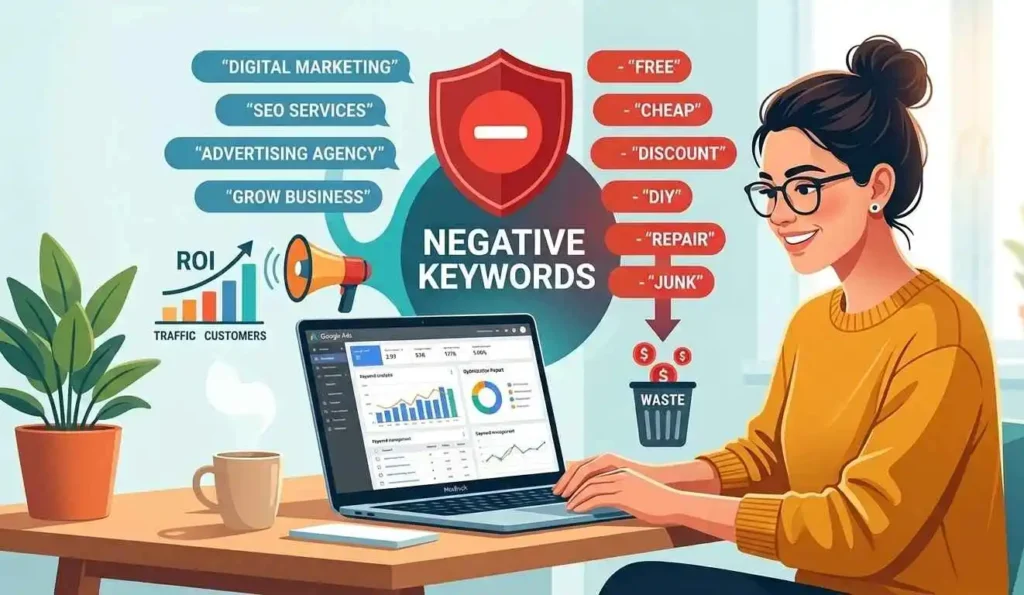
Building an Effective Negative Keyword Strategy
To build a negative keyword strategy you need to take a consistent and performance-focused approach. This is not something you set up one time and forget about. It is a process that you need to work on all the time.
1. Develop a Master Negative Keyword List
You should make a master list of keywords that you can use for many campaigns. This list should include words that are not relevant to your campaigns. Some examples of these words are cheap, jobs, internship etc. Having one list like this helps you keep everything consistent and avoids a lot of extra work.
2. Continuous Monitoring and Optimization
People’s behavior and the way they search for things change over time. So you need to keep checking how your campaigns are doing. You should check on your campaigns consistent. This helps you find new words that are not relevant and stop wasting money.
3. Campaign-Level Customization
Different campaigns are for people and have different goals. So your negative keyword strategy should be different for each one. You should make your negative keywords fit each campaign so they work better.
4. Prioritize High-Spend, Low-Performance Queries
You should look for keywords that get a lot of clicks, cost a lot of money and add them to your list if you need to. This helps you save money.
5. Maintain Balance Between Filtering and Reach
Negative keywords help you target the people but if you use too many you might miss out on some good opportunities. You need to find a balance between keeping out people who’re not a good fit and making sure you can still reach people who might be interested. You should be careful when you decide which keywords to use.
6. Use Data-Driven Decision Making
When you are deciding what to do with keywords you should understand how well your campaigns are doing and what is actually working. Do not guess. Using facts helps you make decisions and have successful campaigns in the long run.
Conclusion
Negative keywords are really important for Google Ads. They are not something extra but something you need to have. The main keywords you choose decide where your ads show up and negative keywords make sure your ads only appear when people search for things that are really relevant and what they want. If you do a job with negative keywords you can control your ads better. This helps with a things like wasting money on ads that people do not need to see and Making your ads work better overall. The important thing is that it helps you reach people who really want what you have. This means people will engage more with your ads and you will get results.
In the end people who use both keywords and negative keywords are more likely to do well and have long term success with Google Ads. They will be able to make their ads work better and get what they want. Negative keywords and main keywords are both important for Google Ads.